You reach for the same spot at the top of your shoulder. It feels tight, tender, and stubbornly familiar. You might call it a knot. Before deciding that it needs the strongest pressure available, it helps to understand what that word means.
A tender spot, not a literal knot.
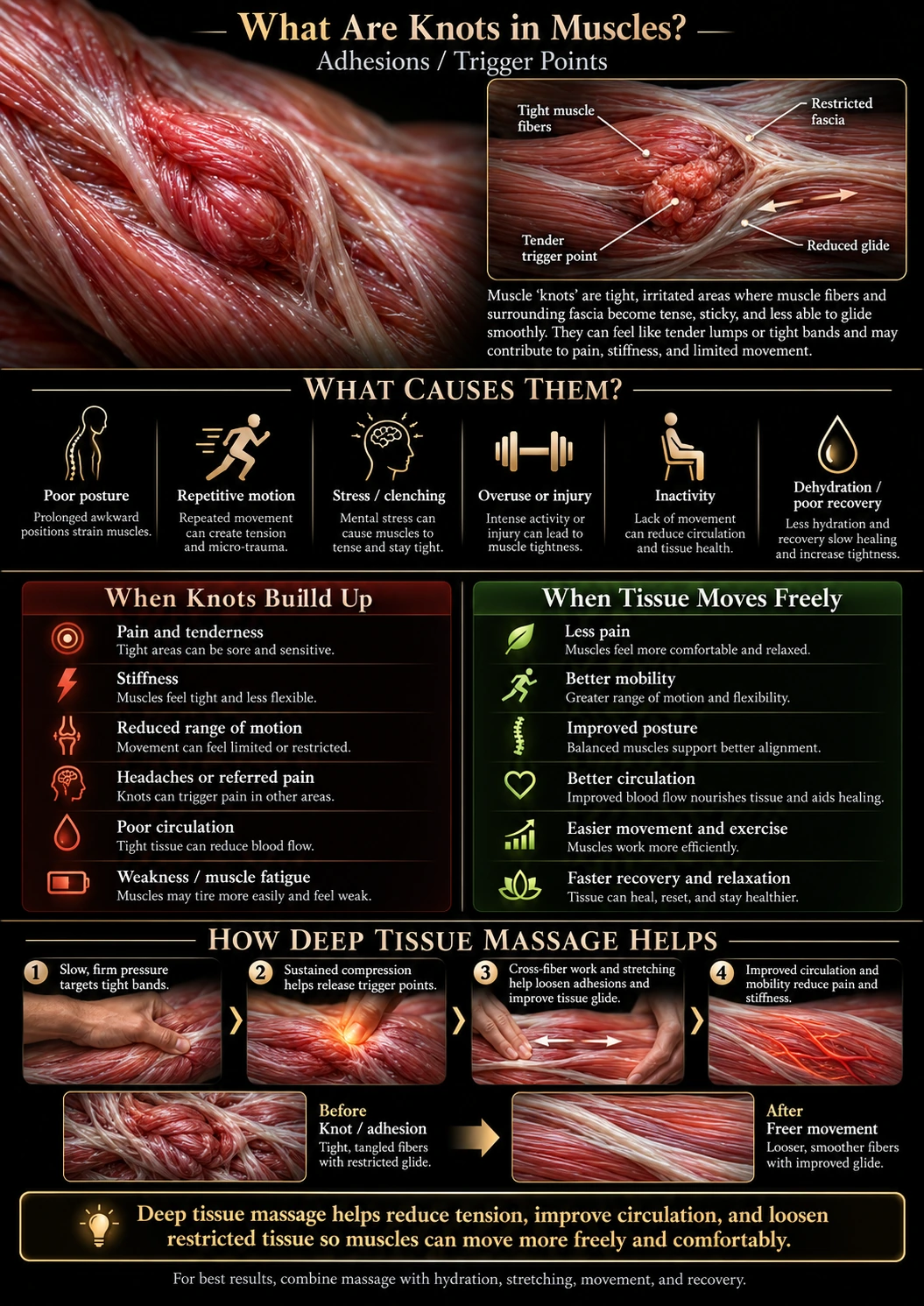
“Muscle knot” is an everyday description for a sensitive area that feels tight or lumpy. The term is often used for a myofascial trigger point. Tenderness can stay near that spot or be felt elsewhere. A sore area alone does not establish a diagnosis.
The yarn-like image below is a visual metaphor. Muscle fibres do not physically weave themselves into a tangled ball. An adhesion is a different concept from a trigger point, and a massage does not mechanically untie muscle or guarantee the removal of scar tissue.
Deep tissue means considered work.
At Release, a focused session begins with a conversation about where you feel tension, the demands of your day, and your comfort with pressure. Slower strokes, kneading, and sustained contact may be used around the areas we agree to address. The approach can change during the session.
Massage may help some people feel less discomfort or more relaxed, but the evidence varies by condition. Much of the research on pain relief has limitations, and benefits may be short term. There is no universal pressure setting or number of appointments that guarantees a result.
You do not need to endure sharp pain. More pressure is not automatically better. Speak up if a technique feels too intense, and ask for lighter pressure, a different position, or a pause.
What to tell me before we start.
- Your focus: the area you’d like attention on and how it feels during normal activities.
- Your preferences: areas to avoid, comfortable pressure, and whether you prefer conversation or quiet.
- Relevant health information: recent injuries or surgery, pregnancy, blood-thinning medication, or conditions your healthcare professional has advised you about.
Massage can carry risks, particularly with vigorous pressure or certain health conditions. New, worsening, persistent, or unexplained pain deserves medical assessment. A swollen, hot, or unusually painful area should not simply be worked harder.
Keep the conversation going.
Notice how the area feels later that day and during your usual routine. Bring that feedback to your next session. Small changes in your work setup, opportunities to move, and comfortable movement breaks can also be useful topics to discuss with your healthcare professional.
If you’re considering deep tissue massage in Fresno, you don’t have to arrive with all the answers. Tell me what you’ve noticed. We can choose a thoughtful starting point together.
Sources & further reading
- NCCIH — Massage Therapy: What You Need To Know ↗
- Cleveland Clinic — Myofascial Pain Syndrome ↗
- Cleveland Clinic — How To Get Rid of Muscle Knots ↗
Educational information, not a diagnosis or an individual treatment plan. Published October 24, 2026.